News
How to Build an Art Investment Portfolio: A Beginner’s Guide for Australian Collectors
20th August 2026
Building an art investment portfolio sounds like something reserved for seasoned collectors with deep pockets, but it doesn’t have to be. With the right approach, a well-chosen selection of original works can sit alongside shares, property, and cash as a meaningful part of your long-term investment strategy. This guide walks Australian collectors through how to start, how much to commit, and how to protect the value of your collection over time.
What Is an Art Investment Portfolio?
An art investment portfolio is simply a deliberately curated collection of artworks acquired with both enjoyment and long-term value in mind. Unlike a single purchase made purely on taste, a portfolio considers how each piece fits into a wider strategy: which artists, which periods, which price points, and how the collection as a whole is likely to perform over time.
Investment art works differently from shares or property. It is a tangible asset you live with, and it carries cultural and emotional value alongside financial return. For many collectors, that is precisely the appeal. For more background on why investment art has become a serious asset class, read our existing guide to investment art for collectors.
How to Start an Art Investment Portfolio in Five Steps
Most successful portfolios are built gradually. The process looks similar for almost every collector who treats art as an investment.
1. Set your goals and budget. Decide whether you are buying primarily for enjoyment, financial return, or a balance of both. Set a total budget and a per-piece ceiling before you start looking.
2. Learn the market. Spend time in galleries, read the catalogues, and follow the auction results for artists you are drawn to. Nothing replaces time spent looking at real work.
3. Choose your focus. A focused portfolio tends to outperform a scattered one. You might focus on iconic Australian artists, a specific period, or a theme that genuinely interests you.
4. Buy the best you can afford. One strong, well-documented piece will almost always outperform three weaker ones at the same total cost. Quality compounds over time.
5. Document everything. Keep receipts, provenance papers, exhibition records, and formal valuations together from the very first purchase.
How Much Should You Invest in Art?
There is no fixed rule for how much to allocate to investment art, but financial advisers commonly suggest that alternative assets, including art, should make up a modest portion of a broader investment portfolio. A sensible starting point for many Australian collectors is somewhere between $5,000 and $25,000 for an opening piece, with additional acquisitions made over time as confidence and budget grow.
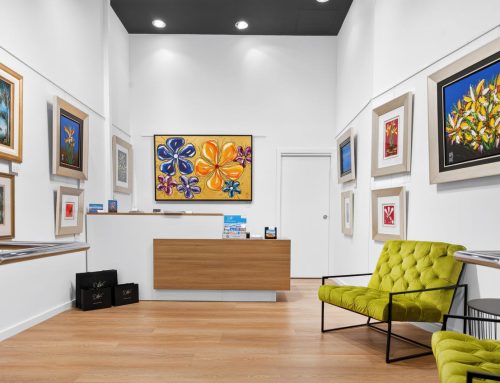
At David Hart Galleries, we work with collectors at every level, from first-time buyers through to serious investors building significant holdings. Our originals collection includes works across a wide range of price points, which makes it possible to start at almost any level.
Where to Buy Investment Art in Australia
Where you buy matters as much as what you buy. For investment art, the safest route is a specialist gallery with a verifiable track record, full provenance documentation, and in-house expertise on the artists they represent.
Specialist galleries such as David Hart Galleries, where each piece is vetted and documented with full provenance.
Established auction houses, which can offer access to secondary-market works, though buyer premiums and limited return windows apply.
Artist studios and representative galleries, for new works directly from the primary market.
Collectors interested in Pro Hart specifically can work directly with our Pro Hart Resales service, which matches authenticated original works with verified buyers. This avoids many of the authentication risks associated with open-market sales.
Protecting Your Art Investment Portfolio
A portfolio is only as strong as the care that goes into protecting it. There are three practical essentials every investment art collector should have in place.
Professional Valuations
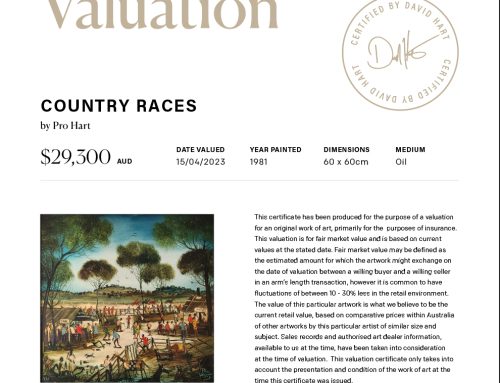
A current, written valuation underpins your insurance cover, supports any future resale, and gives you accurate figures for tax and estate purposes. We recommend reviewing valuations every three to five years, and sooner if the market shifts significantly. Our Hart Art Valuations service provides formal written valuations across all major Australian artists.
Specialist Insurance Cover
Most standard home and contents policies cap art cover well below the value of a serious portfolio. Specified art insurance gives you cover that matches your valuation and protects against theft, damage, and transit risk.
Secure Storage and Display
Climate, light, humidity, and handling all affect the long-term condition of an artwork. Where a piece is not being displayed, professional storage is a worthwhile investment. Our Hart Storage service offers climate-controlled storage specifically designed for fine art.
When to Review and Rebalance Your Portfolio
A good art investment portfolio is not static. Markets move, artists’ reputations shift, and your own taste and budget evolve. A simple annual review, along with a refreshed valuation every three to five years, is enough to keep the collection aligned with your goals. Some collectors choose to sell a piece after significant appreciation to free up capital for the next acquisition. Others hold long term and pass the collection on as part of their estate.
Either approach works, provided the reviews happen and the records stay current.
Common Questions About Art Investment Portfolios
How many pieces should be in an art investment portfolio?
There is no magic number. Many serious collectors build portfolios of ten to thirty works over several decades. For a first-time collector, a focused holding of three to five quality pieces is a strong starting point.
Is investment art tax deductible in Australia?
Some investment art can attract tax benefits under specific structures, including certain self-managed super fund rules and the Australian Cultural Gifts Program. These rules are strict and change from time to time, so always speak with a qualified accountant or financial adviser before relying on tax outcomes.
How quickly can investment art appreciate?
Investment art is a long-term asset. Meaningful appreciation typically takes years rather than months. Pieces by established Australian artists with finite supply, such as Pro Hart, have historically performed well over five to ten year horizons.
Can I sell a piece from my portfolio when I want to?
Yes, although art is less liquid than shares. Specialist galleries, resale services, and auction houses all offer sale routes. Timing the sale with a strong market and current valuation typically delivers the best outcome.
Starting Your Art Investment Portfolio
A well-built art investment portfolio offers something unusual: an asset you get to enjoy every day while it works quietly in the background as part of your long-term financial picture. The first step is often the hardest, but it does not need to be complicated. Explore our investment art collection, browse original works in our originals gallery, or contact the team for tailored guidance on building your portfolio.