The most common mistake people make when buying art is going too small. A painting that looked substantial in a gallery can disappear once it is hung above a three seater lounge, and the room ends up feeling unfinished rather than considered.
Getting the scale right is not complicated. There are a few simple ratios that designers and hangers use, and once you know them you can walk into a gallery with a measurement instead of a guess.
Start with the furniture, not the wall
If your artwork is going above a piece of furniture, the furniture sets the width. The wall is almost irrelevant.
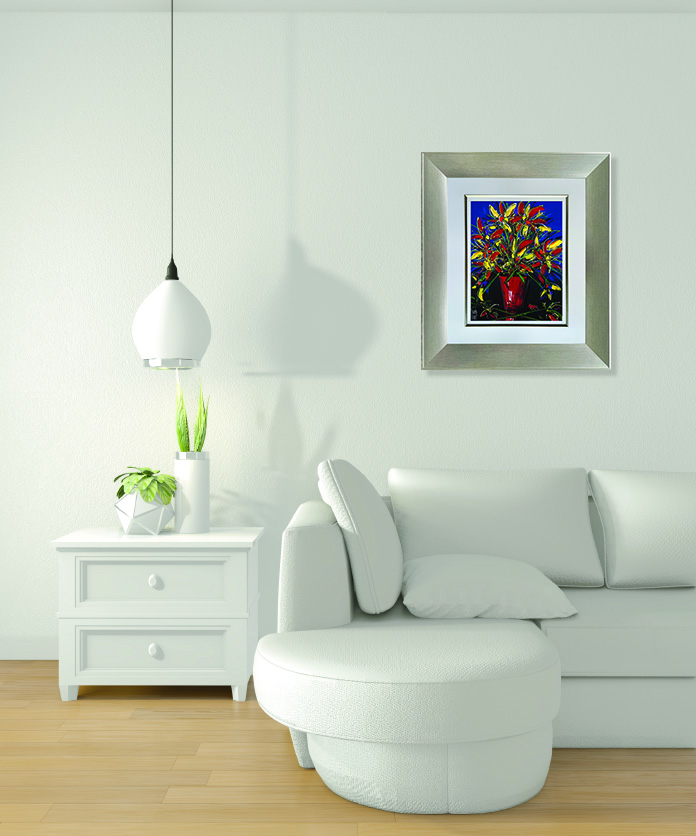
The rule most hangers work to is two thirds. Your artwork should be roughly 60 to 75 percent of the width of the furniture below it. Go narrower than about half and the piece looks stranded. Go wider than the furniture itself and it starts to feel top heavy.
Above a sofa
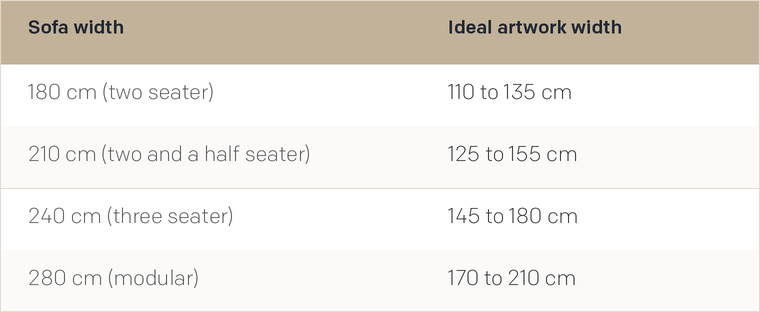
That can be one large piece or a pair hung together. If you are using two or three works, measure the total width including the gaps between them and treat the group as a single artwork.
Above a bedhead
The same two thirds rule applies, measured against the bedhead rather than the mattress.
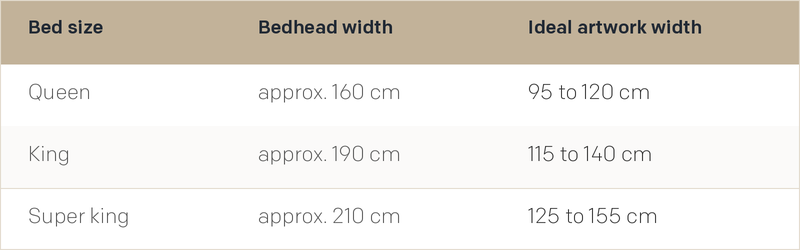
One caveat for bedrooms. A very large piece directly above where you sleep can feel imposing, and heavier works need proper fixings into a stud. If in doubt, go with a pair of medium pieces rather than one oversized canvas.
Get the height right
Most people hang art too high. The gallery standard is to position the centre of the artwork at around 150 cm from the floor, which puts it at average eye level for someone standing.
Two adjustments to that:
- Above furniture, leave a gap of 15 to 25 cm between the top of the sofa or bedhead and the bottom of the frame. Any more and the artwork stops relating to the furniture. Any less and it looks crowded.
- In a dining room or anywhere people are seated, drop the centre point to around 140 cm so the work sits at eye level for people at the table.
High ceilings change the maths
Coastal and modern Queensland homes often have ceilings well above the standard 2.4 metres, and a canvas sized for a normal room will look lost in a void.
For ceilings of 3 metres or more, scale up rather than hanging higher. A single large statement work, or a vertical piece that draws the eye up, will hold the space far better than a standard size canvas floating in the middle of it.
The one thing not to do is raise the hanging height to fill the gap. Art hung at three metres is art nobody looks at. Keep the centre near eye level and let the scale of the piece do the work.
Landscape, portrait or square
Match the orientation to the space, not to the artwork you happen to like.
- Wide horizontal walls, above sofas, sideboards and bedheads, suit landscape formats.
- Narrow vertical spaces, beside doorways, in hallways or between windows, suit portrait formats.
- Square works are the most forgiving and sit comfortably almost anywhere, which makes them a safe choice if you expect to move the piece around.
The tape test
Before you commit, mark it out. Run painter’s tape on the wall to the exact dimensions of the artwork you are considering, or cut a sheet of butcher’s paper to size and stick it up.
Live with it for a day. You will know within a few hours whether the scale is right, and it costs nothing to find out.
A note on texture and viewing distance
Heavily textured paintings behave differently to prints. Impasto work, palette knife detail and hand embellished surfaces reveal themselves at close range and flatten out from across a room.
If a piece is going somewhere people walk past rather than sit, such as an entry or hallway, texture rewards you. If it is going on a far wall in a large open living space, scale and colour matter more than surface detail.
Where to go from here
Every piece in our online store lists its exact dimensions, so once you have your target width you can filter quickly rather than scrolling.
- For a statement work, browse David’s original paintings.
- For the look and texture of an original in a wider range of sizes, look at the hand embellished Masterworks.
- For smaller walls and considered budgets, the fine art reproductions are available across several sizes.
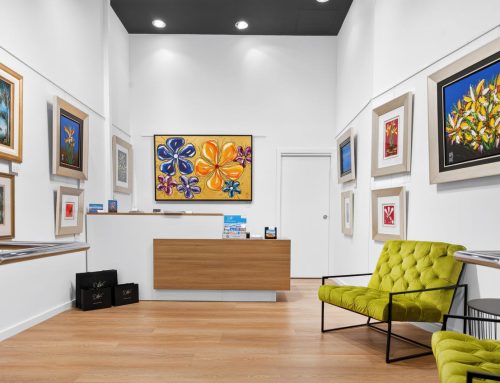
If nothing fits your wall exactly, David also takes bespoke commissions built to a specific size and palette. And if you would rather see scale in person before deciding, the Gold Coast gallery at Main Beach is spread across three levels with work hung at every size.